Map systems & data
We inventory every tool in play — CRM, payments, analytics, marketing automation — the data each one owns, and where teams copy-paste by hand. The map drives the contract.
 Let's talk!
API · Back-End & Martech Integration
Back-end engineering and martech integration that turn disconnected tools — CRMs, payments, ads, email, analytics, automation — into one operating system that runs without manual handoffs.
Integration approach
We map the systems and the data each one owns, lock the contracts, then build the middleware that moves events between them — and ship it with the monitoring an ops team would expect. Mapping, API & middleware engineering, and observability run as one workflow, so the stack behaves like a single product.
We inventory every tool in play — CRM, payments, analytics, marketing automation — the data each one owns, and where teams copy-paste by hand. The map drives the contract.
We design the API contracts, map and transform fields between source and destination schemas, and build the middleware pipeline — ingest, transform, route — with auth, retries and idempotency baked in.
We ship with live dashboards for requests, webhook delivery, latency and queue depth — plus alerting and a runbook — so the stack keeps moving data even when a vendor's API has a bad day.
Selected work
Real back-end and integration engagements — the visible surface is the easy part; the plumbing is what keeps it running. Scroll the work past.
We inventory every tool, the data each one owns, and the manual handoffs in between — the map that drives the contract.
We design the contracts and map fields between source and destination schemas before a line of middleware is written.
Ingest, transform, route — built as one pipeline, with queues and dead-letter handling for the events that misbehave.
OAuth, HMAC signatures, exponential backoff, and idempotency keys keep the stack correct when a vendor’s API has a bad day.
Dashboards for requests, webhook delivery, latency, and queue depth — plus alerting and a runbook — ship with the integration.
 Infrastructure · B2B
Encardio Rite
Encardio Rite had decades of geotechnical engineering authority the internet could barely see. MarkAge360 built an integrated SEO, content and executive-branding system that grew monthly organic traffic from around 800 to as many as 70,000, with page-one visibility across five markets: India, the USA, the UK, the UAE and Australia.
 Consumer · Brand campaign
Apple Switchers Campaign
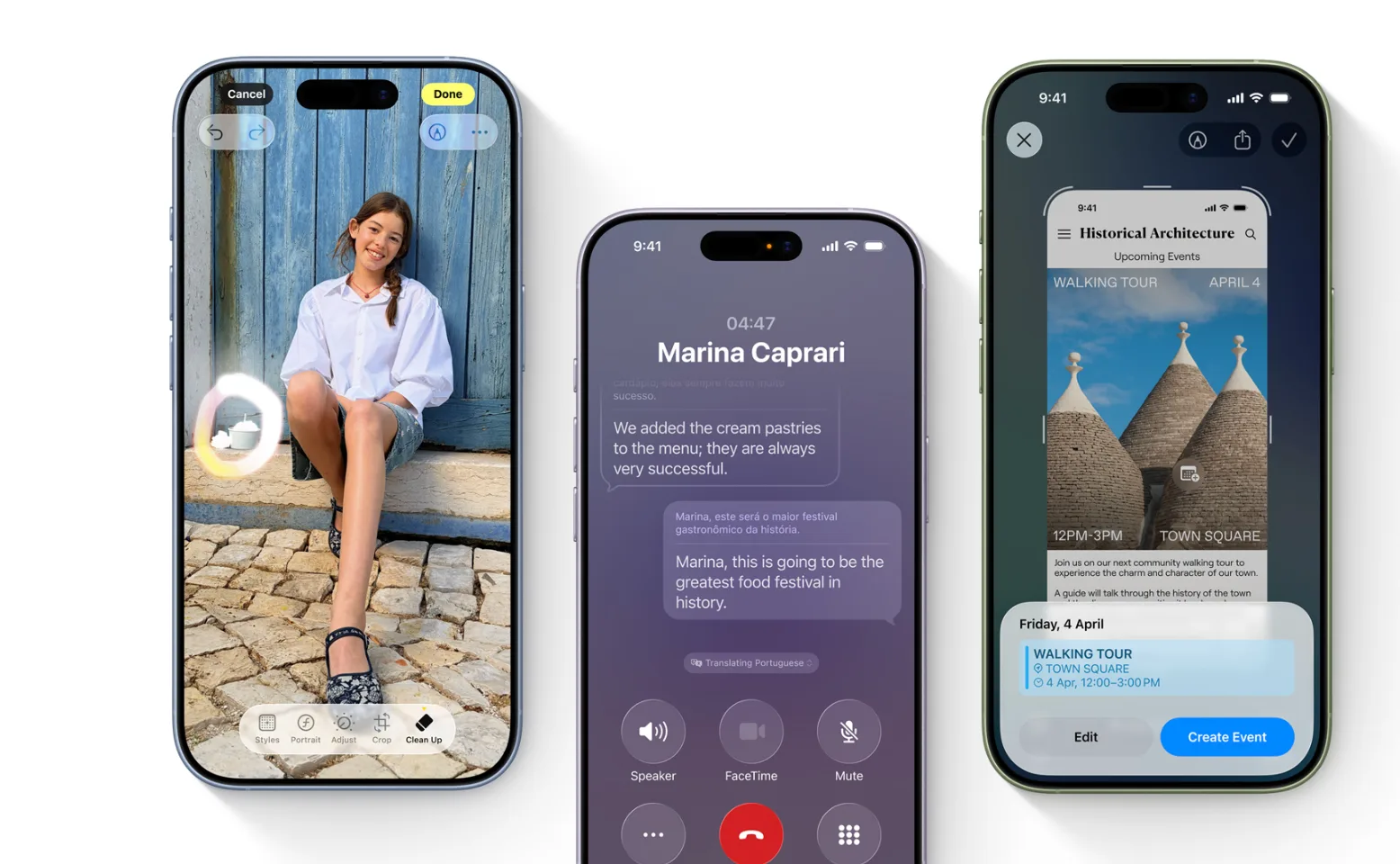
Apple wanted non-Apple users across India's metros to reconsider iPhone. MarkAge360 ran a video-led brand campaign that showed what the Apple experience offers and how easy switching can be.
 Automotive Marketing
Acton Service Centre
Five years running every marketing channel for a West London MOT and service garage, and building the software behind it. Organic traffic up 2,400%, revenue up 900%, and a first party customer database past 100,000.
 Legal · Solicitors
Clifford Harris & Co
Clifford Harris & Co has advised businesses and families from London's West End since 1957, but its digital presence did not carry that standing. MarkAge360 rebuilt the firm online: a sharper brand expression, a website organised around how clients actually choose a solicitor, and search foundations written into every practice area.
 Commercial · Tile Retail
Ferreira's
Ferreira's sells luxury Italian porcelain from a showroom on West End Lane in West Hampstead, and designs, supplies and fits it too. We ran their marketing as one system for two years: identity, a bathroom-led catalogue, search, and paid media built around a product people research for months and buy in person.
 Higher Education
Institut Français India
MarkAge360's demand-generation system for Institut Français India: paid media, education affiliates, and lifecycle messaging run as one connected student-acquisition engine. It beat the Choose France lead target by 47% and returned an 8:1 ROI, with ₹8 back for every ₹1 spent.
 Wellness · Subscription
OJO Life
OJO Life is a Delhi NCR wellness and meal-subscription brand that had spent two years stuck against its revenue ceiling. MarkAge360 built one connected wellness marketing growth system.
 Higher Education
Study in India · GMAC
GMAC's Study in India mandate, 2018 and 2019 combined: 00,000 in global media across two campaign years, and 24,000+ qualified student enquiries from 40+ countries.
 Higher Education / Test Prep
The GMAT Exam by GMAC
Seven years, four regional mandates, 400,000+ leads across 20+ countries — work that began at King Crescent and moved to MarkAge360 at founding. What began as a one-year Middle East & Africa test grew into GMAC’s four-region growth partnership, every expansion earned on delivered numbers.
 Education / Test Prep
Aakash iACST
Aakash's iACST is an always-on scholarship test. The mandate: hit the lead target for the August flight and cut cost at every stage. MarkAge360 delivered a 12% lead-to-conversion rate, with cost per lead down 15% and cost per conversion down 28%.
 Education / Study Abroad
TOEFL Olympiad
A two-phase, full-funnel campaign that introduced the TOEFL Olympiad to India's Gen Z — turning study-abroad ambition into reach, a qualified database, and registrations that cleared every target set.
 Geotechnical · B2B
Rite Geosystems
Rite Geosystems had deep expertise in geotechnical instrumentation and infrastructure monitoring that the US market could barely find online. MarkAge360 built an integrated system across US-focused SEO, engineering content, website optimisation and social media, making the brand discoverable for the products, applications and engineering problems central to its market.
01 / 12 · selected build
View caseTools we connect
Related digital services
Integration work usually sits next to a website, an app, a portal, or a tracking project. These sibling pages show what often gets wired together in the same engagement.
API, Back-End & Martech Integration FAQ
Straight answers on API development, martech integration, and the monitoring that keeps your tools talking.
We design and build the layer that connects your tools — CRM, payments, email, ads, analytics, and automation platforms — so data moves between them without manual exports. A typical engagement covers API design (REST, GraphQL, webhooks), field mapping and data normalization, middleware that ingests, transforms, and routes events, plus authentication, retries, and monitoring. The deliverable is a stack that behaves like one system rather than a folder full of disconnected logins.
We price by scope: how many systems are involved, how clean their APIs are, and how much data transformation sits in between. A single CRM-to-warehouse sync is a fixed-scope project; a multi-tool middleware platform with ongoing event routing is usually a build plus a monthly retainer for monitoring and maintenance. We scope it after mapping your systems, so you see the contract before any code is written — no open-ended hourly surprises.
A focused two-system integration with well-documented APIs typically ships in two to four weeks. A broader middleware layer that connects several tools with custom transformations and full observability usually runs six to ten weeks. The biggest variable is the vendors themselves — rate limits, sandbox access, and undocumented quirks — which is exactly why we start with a mapping phase before committing to a timeline.
No-code connectors are great for simple, low-volume tasks, and we will recommend them when they fit. They tend to break down on high event volume, complex field mapping, conditional routing, or when you need real reliability guarantees and audit trails. We build custom APIs and middleware when you need retries, idempotency, signed webhooks, and full visibility into every call — the things that keep revenue-critical data flowing when a vendor has a bad day.
We work across the common martech and commerce stack — Salesforce, HubSpot, Pipedrive, and Zoho on the CRM side; Stripe and similar billing systems; Klaviyo and other lifecycle tools; GA4, BigQuery, and Meta CAPI on the data and ads side. If a tool exposes an API or webhooks, we can integrate it, and where one does not, we build the middleware to bridge the gap. The goal is your stack, wired the way your team actually runs.
We build for failure from day one. Every integration ships with retries, idempotency, and queueing so a temporary outage does not lose events, plus live dashboards for request rates, webhook delivery, latency, and queue depth. When something breaks, alerting fires and a runbook tells your team exactly what to do. We monitor for breaking API changes and version our contracts so an upstream update does not silently take your data flow offline.
Tell us the business problem. We'll map the service mix and come back with a written proposal.