Swadesh Darshan Portal: Project Monitoring MIS with EY
Many states, many agencies, one scheme to account for
What we built: an e-governance portal with MIS dashboards
One source of truth for a national scheme
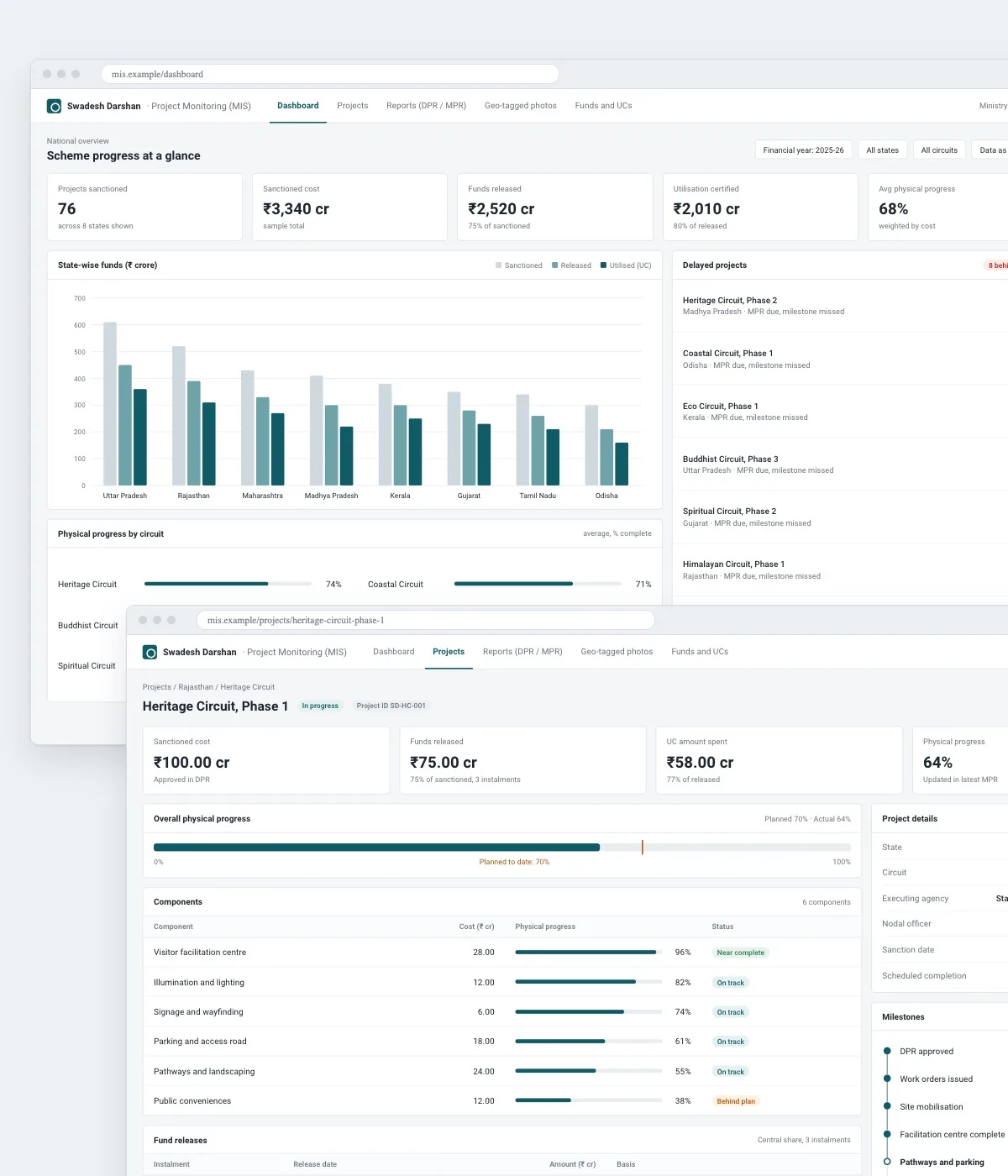
Let's talk! The Swadesh Darshan portal (swadeshdarshan.gov.in) is the Ministry of Tourism's MIS for the scheme. Working with EY, we built its backend: states report progress, spend and geo-tagged site photos into it, and reviewers see every project on one dashboard.
EY · Swadesh Darshan

Many states, many agencies, one scheme to account for
What we built: an e-governance portal with MIS dashboards
One source of truth for a national scheme
Swadesh Darshan funds theme-based tourism circuits and destinations across India. Every project brings together a state department, an executing agency and central funds that have to be tracked from sanction to completion.
Launched by the Ministry of Tourism in 2014-15, Swadesh Darshan funds theme-based tourism circuits across India, from heritage and spiritual routes to coastal, eco and Himalayan circuits. Under Swadesh Darshan 2.0 the focus moved to sustainable, destination-led development. Either way, every project is a chain of approvals, fund releases and works that has to be accounted for. Without one system, that picture has to be pieced together from reports sent in different formats, at different times, by different bodies. The Ministry needed a single place where states report, where the project team checks, and where reviewers can see sanctioned cost, funds released, money spent and physical progress for any project in any state.

A government MIS is only as good as the data going in. The portal is built around the three jobs it has to do every month.
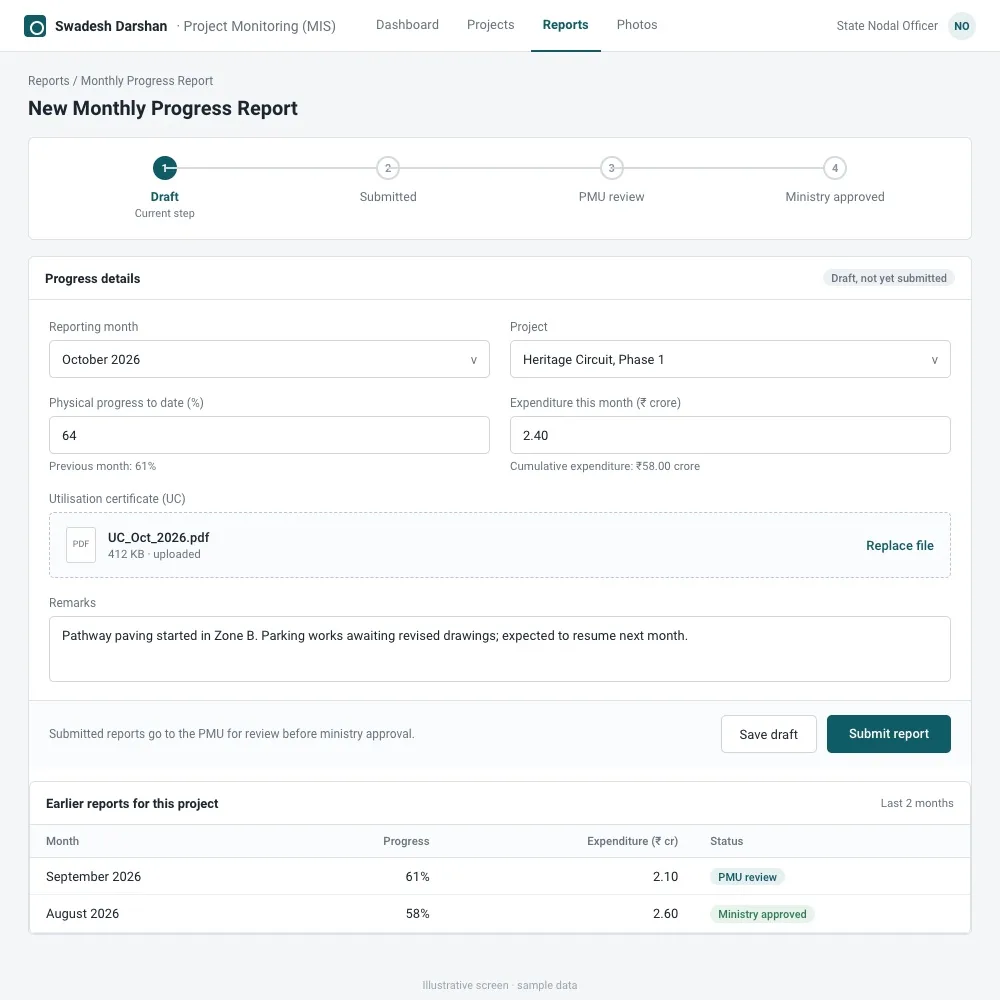
State Tourism Departments, State Tourism Development Corporations and Central Implementing Agencies log in to submit Detailed Project Reports, Monthly Progress Reports and geo-tagged site photos.
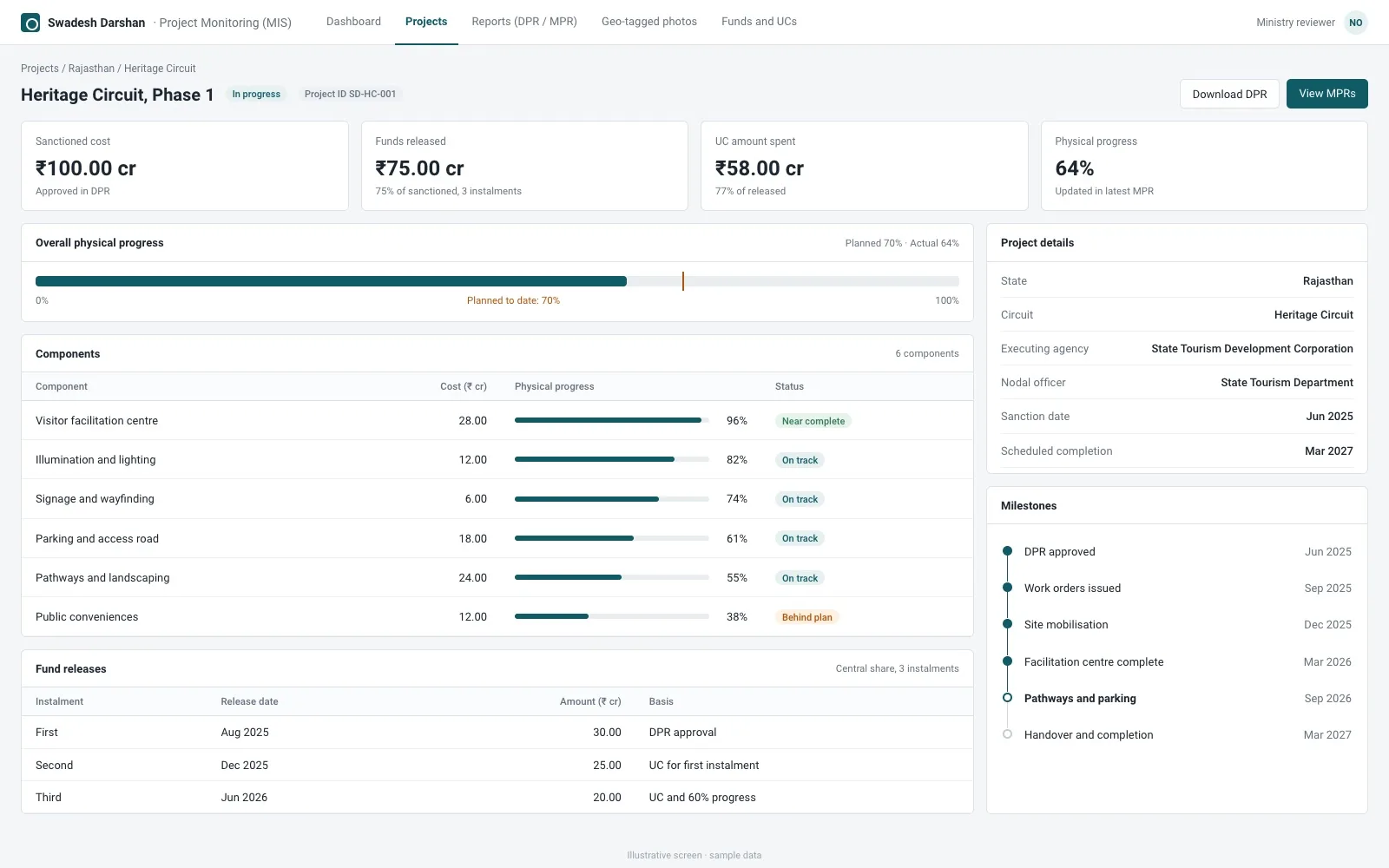
For every destination or circuit project, the portal records the sanctioned budget, funds released, the amount actually spent against utilisation certificates, and physical progress as a percentage.
Each project carries the agency building or restoring the site, so delays and spend can be traced to the body responsible.
Detailed Project Reports and Monthly Progress Reports are stored against the project they belong to, so the full reporting history of each project sits in one place.
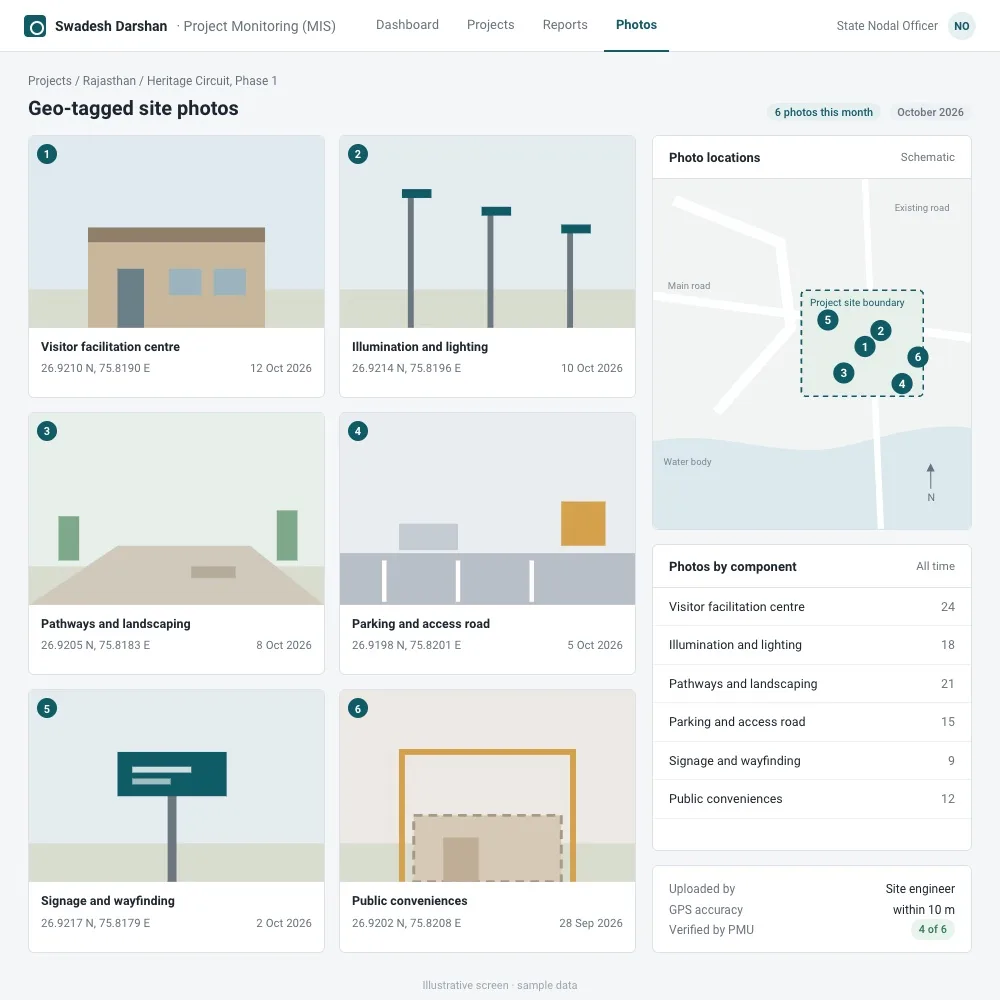
Site photos carry their location and date, tying each progress update to the place where the work is actually happening.
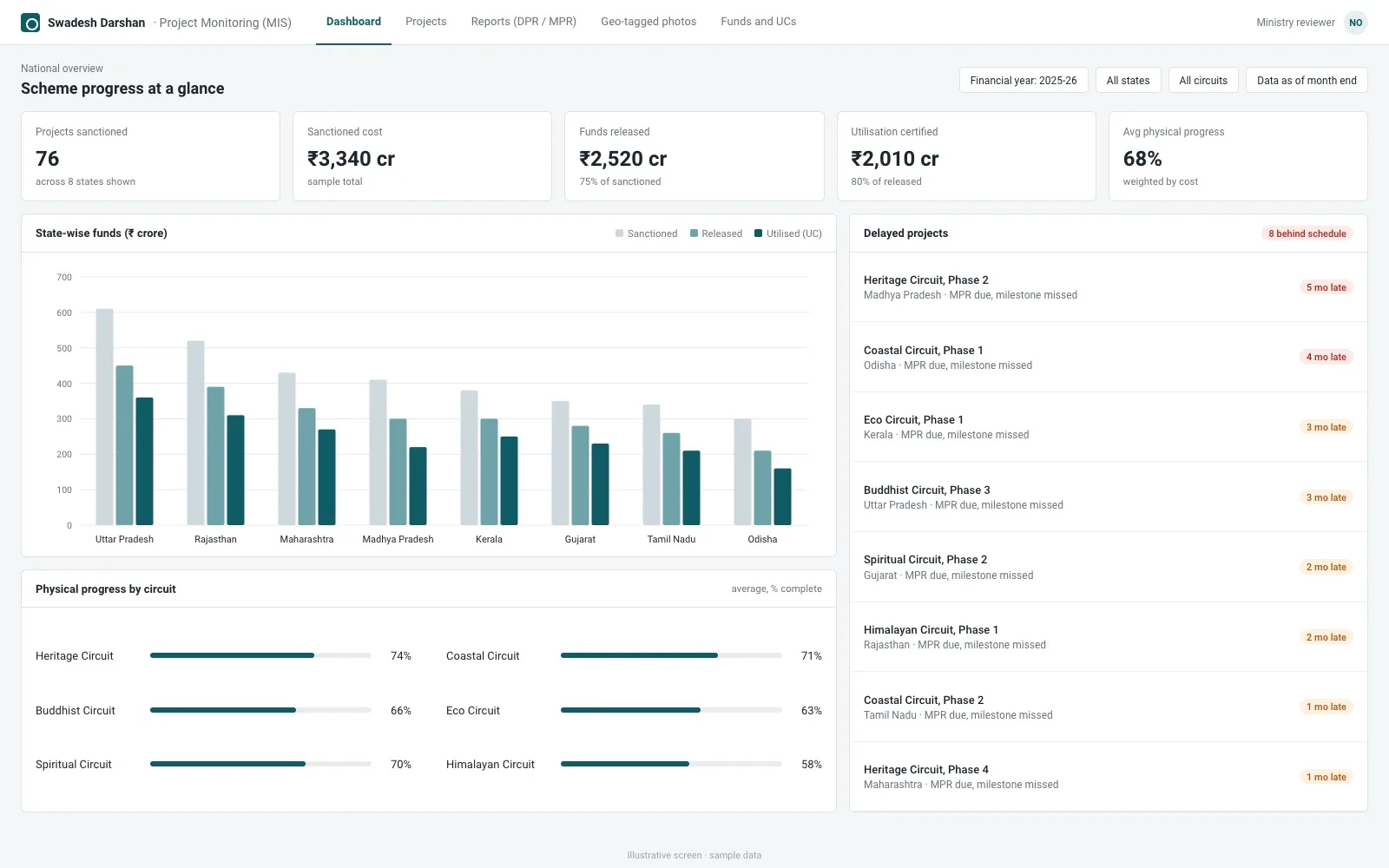
Ministry reviewers use the dashboards in central review meetings to show completed milestones, flag delays and check how central funds are being spent across states.
Separate logins and views for states, development corporations, central agencies, the project management team and the Ministry, so each user sees and submits only what is theirs.
One record per project, from sanction to release to utilisation, with physical progress alongside, so the financial and on-ground picture are always read together.
Geo-tagged photo uploads tie progress claims to a place and a date, giving reviewers proof from the ground rather than a number on a form.
National and state-wise views that roll every project up into the figures a review meeting needs: sanctioned, released, utilised, progress and delays.
Keep scrollingSwipe


The portal gives the Ministry of Tourism and its partners one current record of each Swadesh Darshan project: what was sanctioned, what was released, what was spent, how far the work has come and who is doing it. States report once, into one system, and every review starts from the same numbers.
That is the job of a good project monitoring system in e-governance: making it easy to see which projects are on track, which are slipping, and how central funds are being used, without chasing figures across inboxes and spreadsheets.
From e-governance portals and MIS dashboards to full web application development, we build the systems government programmes run on, designed around the people who report into them. Tell us about yours.
See how we can improve performance and scale what's working.